
Service 04
Paving stones: driveways,
patios and walls
Pavers that stay flat after five winters have nothing to do with the brick. It’s what sits underneath. We excavate, compact in layers, then install — in that order.
Our advantage: we’re excavators first
Nearly every paver installation in Quebec that sinks, heaves or comes loose shares the same defect: a base that’s too thin, poorly compacted, or laid on ground that wasn’t excavated deep enough. Frost gets into the fines, swells, and the work has to be redone.
Groupe GZ does excavation year-round. We know how deep to go for a given soil type, how to manage subsurface water, and how to compact a base that won’t move. The pavers are the finish.
What we build
- Driveways and parking areas — reinforced base to carry vehicle loads and snow-clearing equipment.
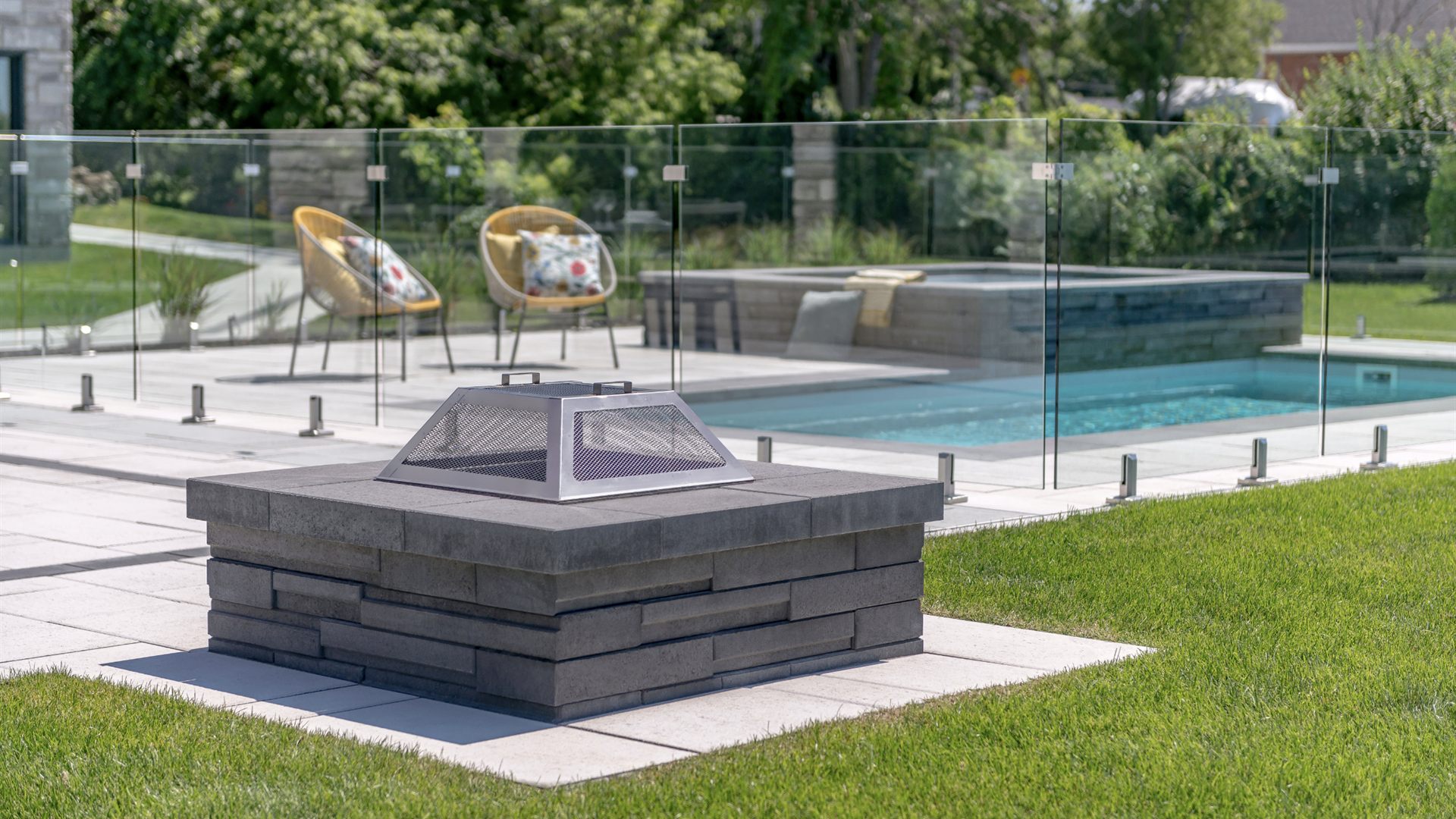
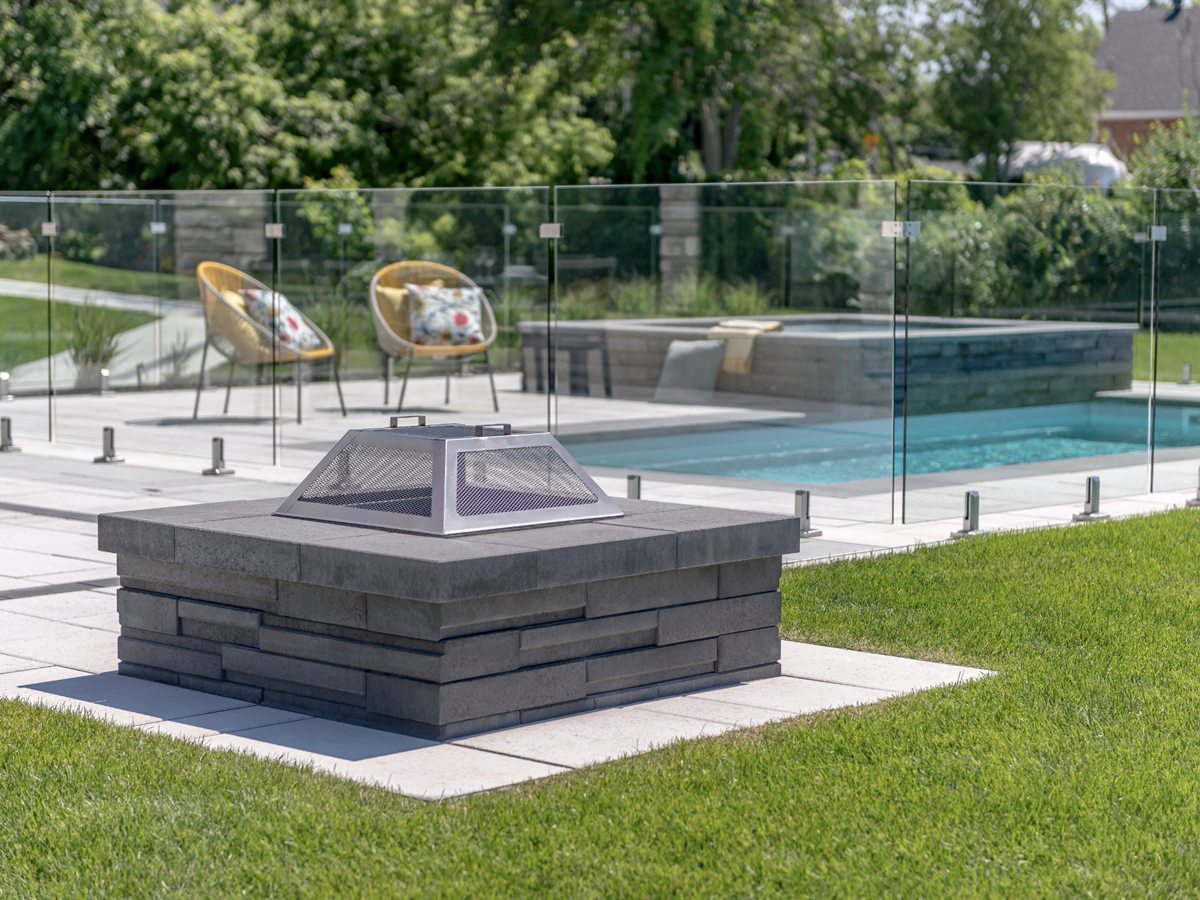
- Patios and slab terraces — large format, architectural concrete slabs or traditional pavers.
- Pool decks — slopes calculated to move water away from the pool and the foundation.
- Retaining walls — interlocking block with rear drainage and geogrid according to height.
- Steps, borders and landings — natural stone or precast concrete.
- Full landscaping — grading, yard drainage, decorative stone, sod or artificial turf.
How we build a base that holds
- Excavation. Topsoil and unstable material removed to the required depth — deeper for a vehicle driveway than for a patio.
- Separation geotextile. Laid on the excavation floor to keep native soil fines from migrating up and contaminating the base.
- Compacted granular base. Crushed stone placed and compacted in successive lifts, with slope control for water runoff.
- Bedding layer. Thin layer of screening levelled with a screed rail. Never a thick sand bed: that’s what creates waves.
- Paver installation. String-line alignment, saw cuts, consistent joints.
- Edge restraint. Steel, concrete or plastic edging, anchored — without lateral restraint, pavers spread at the edges.
- Polymeric sand and final compaction. Sand swept into joints, plate-compacted, activated with water. Joints lock together and resist weeds and ants.
A paved surface that sends water toward the house undoes everything done to the foundation. We design every project with a slope away from the building — and when the lot doesn’t allow it, we build in a surface drain or a yard drain.
Settlement warranty
We warrant our installations in writing against settlement and heaving caused by a base or installation defect. The term is stated in the quote. The pavers themselves carry the manufacturer’s warranty, which we pass on to you.
Frequently asked
What do paving stones cost per square foot?
Can pavers go over existing asphalt?
What maintenance is required?
Does de-icing salt damage pavers?
Projects
Pavers, walls and landscaping
Next step
The yard you’ve been
putting off for three years
Book early: schedules fill up as soon as the ground thaws. Detailed quote, free and with no obligation.